
Four Cost Reduction Paths for Molybdenum Metal Powder in Powder Metallurgy
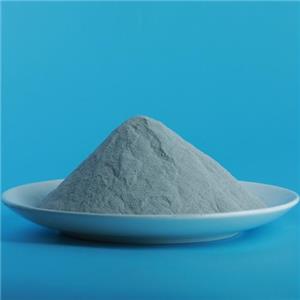
Fluctuations in global supply chains and growing demand for high-end manufacturing have made molybdenum metal powder procurement costs the focus of powder metallurgy companies. Molybdenum metal powder is widely used in powder metallurgy due to its high melting point, high strength, and good electrical and thermal conductivity. From alloy steel additives to semiconductor targets, from high-temperature structural parts to wear-resistant coatings, they are used in many key industrial fields.
Traditional processes consume high energy, material losses are not low, and profit margins are squeezed. Is there any way to reduce costs without affecting quality? The following will talk about feasible ideas from the four directions of process, process, selection and product upgrade.
1. Optimize the Reduction Process and Reduce Energy Consumption
The production of molybdenum metal powder mainly adopts the hydrogen reduction method, that is, molybdenum oxides (such as molybdenum trioxide or ammonium molybdate) are gradually reduced to metallic molybdenum powder in a high temperature hydrogen atmosphere. In this process, the energy consumption of the hydrogen reduction link accounts for a high proportion.
Traditional reduction furnaces mostly adopt a fixed temperature zone design, and the entire reaction process is completed in the same temperature range. But in fact, the reduction reaction rates and thermodynamic requirements of molybdenum oxide at different stages are not the same. If the same temperature is used for the entire section, the reaction in the front section will be insufficient, and the temperature in the back section will be excessive, and the heat utilization efficiency will be very low.
The improvement idea is to adopt segmented temperature control. Simply put, different temperatures are set at different stages when the material enters the reduction furnace, so that the reaction at each stage is in relatively suitable conditions. This approach allows the reduction reaction to proceed more fully while reducing unnecessary heat waste, thereby reducing fuel and power consumption.
2. Shorten the Smelting Process and Reduce Intermediate Losses
The production chain of molybdenum metal powder is usually long: industrial molybdenum oxide is obtained from roasting molybdenum concentrate, then purified to obtain ammonium molybdate, then calcined to high-purity molybdenum trioxide, and finally reduced by hydrogen to obtain molybdenum powder. There are multiple processes in the middle, and each additional link will result in additional material loss, equipment depreciation and labor costs.
In this chain, the conversion of ammonium molybdate to molybdenum trioxide is a key breakthrough in cost reduction. The traditional treatment method is to crystallize first, then separate, then dry, and then calcination. There are many steps, the material will be lost during multiple transfers, and each process requires energy consumption and equipment maintenance.
If the crystallization and subsequent processing links can be integrated to reduce the number of transfers of intermediate materials, losses and processing costs can be reduced. This is called a "short process" process in the industry and has been an optimization direction in the molybdenum metallurgy field in recent years.
3. Select and Match to Reduce Waste
Many buyers have a cognitive misunderstanding: the purer and finer molybdenum powder, the better. But in fact, the requirements for molybdenum powder in different application scenarios vary greatly, and improper selection will bring unnecessary costs.
For example, molybdenum powder used for thermal spraying requires the powder to be spherical or nearly spherical to ensure good fluidity during the spraying process and can be uniformly transported to the spray gun nozzle. If the shape of the powder is irregular and the fluidity is poor, the problem of uneven powder feeding may easily occur during the spraying process. The particle size of this type of molybdenum powder is usually in the order of 10 to 100 microns. Too fine is not conducive to powder feeding.
Therefore, selection is a process that needs to be matched according to specific processes. If suppliers can help customers analyze specific needs, recommend suitable specifications, and even adjust particle size distribution or purity according to customers 'equipment conditions, they can help customers ensure results while avoiding unnecessary costs.
Liaoning Hongtuo New Material Technology Co., Ltd. supports the customization of molybdenum powder with special particle size, purity and form according to customer requirements, and provides technical docking services to help customers match suitable products in different application scenarios.
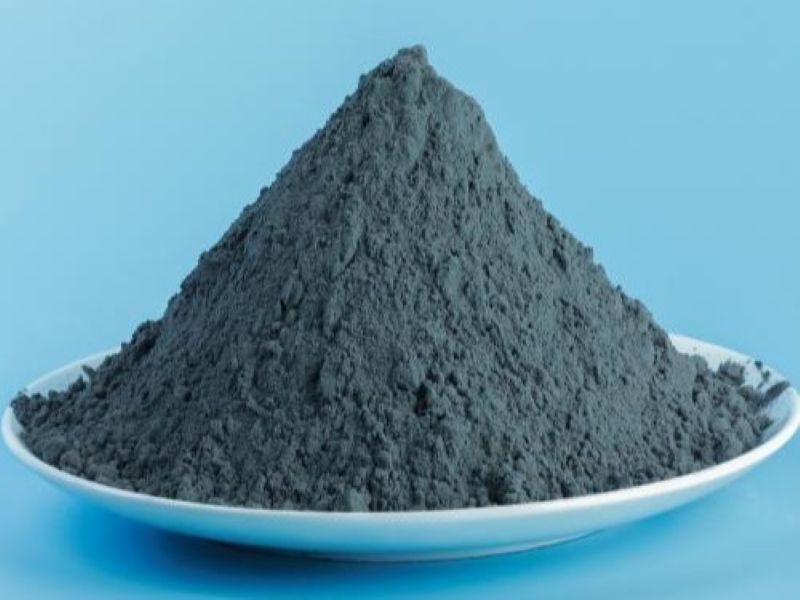
4. Promote Product Upgrades and Provide Alternative Options
Molybdenum metal powder can be divided into different grades based on purity and particle size. Ordinary industrial-grade molybdenum powder (purity is about 99.0%-99.5%) is mainly used in alloy additives, welding materials and other scenarios. High-end application scenarios-such as semiconductor sputtering targets, aerospace superalloys, and core components of medical equipment-have high requirements for the purity (usually more than 99.95%, or 3N5 level), particle size distribution and consistency of molybdenum powder.
In recent years, some molybdenum powder companies in China have made progress in the preparation of high-purity molybdenum powder by improving reduction processes and classification technologies. By controlling the temperature curve and hydrogen flow rate during the reduction process, impurities can be removed more effectively and molybdenum powder with finer grains and more evenly distributed can be obtained. Optimization of classification technology can make the particle size distribution of the finished molybdenum powder more concentrated and reduce the proportion of too large or too small particles.
Taking Liaoning Hongtuo New Material Technology Co., Ltd. as an example, the purity of its mass-produced molybdenum metal powder can reach more than 99.99%(4N level). It is at the same level as similar international products in terms of density, uniformity and other indicators, filling the domestic Some gaps in the high-end molybdenum powder market. Currently, the company is advancing the research and development of molybdenum powder with a purity of 5N (99.999%) to cover more demanding application scenarios.
About Liaoning Hongtuo New Materials Technology Co., Ltd.
Liaoning Hongtuo New Material Technology Co., Ltd. is located in Jinzhou City, Liaoning Province, China. It is a company focusing on molybdenum metal powder and its downstream deeply processed products. The company has a complete production line from ammonium molybdate to high-purity molybdenum trioxide, to molybdenum powder and pure molybdenum metal, achieving independent production in the entire chain.
The company has a daily production capacity of 500 kilograms of molybdenum powder. The R & D team is led by a doctor of materials science and is equipped with a CNAS accredited laboratory. It has complete capabilities from basic research to application development.
The company has more than ten years of experience in the powder metallurgy industry. Its products have been widely used in military, petrochemical, medical, electronics and precision instruments. It is committed to providing stable and reliable high-purity molybdenum metal powder products and technical support to customers around the world.
If you have purchasing needs or technical questions about molybdenum metal powder, please contact Liaoning Hongtuo.