
How Does Molybdenum Purity Affect Rod Performance? A Comprehensive Guide for Industrial Procurement
Purity—The Most Critical Yet Often Overlooked Parameter for Molybdenum Metal Bars
When purchasing molybdenum metal bars and rods, buyers often focus on dimensional tolerances and price, frequently overlooking a core parameter that determines the product's ultimate performance: purity.
Molybdenum (Mo) is a refractory metal renowned for its outstanding high-temperature strength, extremely low thermal expansion coefficient, and excellent electrical conductivity. However, these properties are not fixed constants; they vary significantly depending on the molybdenum content and the types of impurities present in the material.
This article provides a systematic overview of the differences in mechanical, thermal, electrical, and chemical properties among molybdenum rods of varying purity levels, helping industrial buyers precisely match product specifications to their application requirements.
I. Understanding the Purity Grades of Molybdenum Rods
Common purity grades for molybdenum rods are as follows:
| Purity | Industry Logo | Typical Application Scenarios |
| 99.95% min | Mo-1 | General industrial use |
| 99.80% min | Mo-2 | Standard industrial grade |
| 99.97% min | Mo-3N7 | High-performance industrial applications |
| 99.99% min | Mo-4N | Semiconductors, vacuum equipment, scientific research |
The remaining trace impurities primarily include oxygen (O), iron (Fe), carbon (C), nickel (Ni), silicon (Si), and nitrogen (N). Even at concentrations in the parts-per-million (ppm) range, these impurities can have a quantifiable adverse effect on the final product.
2. Mechanical Properties: Strength and Toughness
Higher purity results in superior low-temperature toughness.
Impurities in molybdenum tend to segregate at grain boundaries during processing and heat treatment. Oxygen and nitrogen are particularly detrimental; they form brittle intermetallic compounds at grain boundaries, acting as crack initiation sites under stress concentration.
99.95%+ grade rods: Exhibit significantly improved room-temperature bending toughness, allowing for drilling, turning, and threading without preheating.
99.99% rods: Possess the lowest ductile-to-brittle transition temperature, making them suitable for precision-machined components subjected to cyclic stress.
If your application involves complex machining, forming, or thermal cycling conditions, selecting a material with at least 99.95% purity can effectively prevent the loss of scrapped parts during processing.
3. High-Temperature Performance: Recrystallization and Creep
Molybdenum's primary selling point is its high-temperature performance; with a melting point of 2,623°C, it ranks among the top metallic materials. However, impurities significantly compromise high-temperature creep resistance and recrystallization stability.
Recrystallization Temperature: When molybdenum bars are heated—such as in sintering furnaces, vacuum furnaces, or sputtering target mounts—grain growth occurs and the work-hardened microstructure disappears; this process, known as recrystallization, leads to a sharp drop in strength. High-purity molybdenum exhibits a more stable recrystallization temperature, whereas impurities (particularly oxygen and iron) accelerate recrystallization, thereby increasing operational risks.
Creep Resistance: Under sustained loads at temperatures exceeding 1,000°C, lower-purity molybdenum bars exhibit a markedly faster rate of cumulative creep. For applications involving structural supports in vacuum furnaces or high-temperature heating elements, the use of material with a purity of 99.95% or higher is strongly recommended.
4. Electrical and Thermal Conductivity
The room-temperature electrical resistivity of pure molybdenum is approximately 53.4 nΩ·m. Each impurity atom disrupts the metal lattice and scatters conduction electrons, leading to an increase in resistivity.
99.95% grade: Approaches nominal conductivity; meets the requirements of most electrode applications.
99.99% grade: Closest to the theoretical conductivity of pure molybdenum; suitable for precision electrical contacts and semiconductor processing components.
Thermal conductivity follows the same pattern: the higher the purity, the closer the thermal conductivity is to the theoretical maximum of 138 W/m·K, which is advantageous for thermal management applications requiring rapid heat dissipation.
5. Corrosion and Oxidation Resistance
Pure molybdenum oxidizes rapidly in air at temperatures above 600°C, forming MoO₃—which sublimes—thereby continuously exposing fresh metal surfaces. Impurities such as iron, nickel, and copper act as catalysts for the oxidation reaction, lowering the onset temperature and accelerating the oxidation rate.
In controlled-atmosphere environments (hydrogen, inert gases, or vacuum), the surface chemical behavior of high-purity molybdenum rods is more stable and predictable. Low impurity levels minimize the risk of process contamination—a factor particularly critical in semiconductor and optical coating applications, where even sub-ppm levels of metallic contamination from the rod material can impact product yield.
6. Machinability and Surface Quality
Impurities—particularly hard carbide or oxide inclusions—create non-uniform zones across the cross-section of the rod. During precision turning or grinding, these inclusions cause tool chipping and inconsistent surface roughness; hard spots lead to dimensional variations; and grain boundary segregation can induce micro-cracks during machining.
Utilizing molybdenum metal bars with controlled quality and >99.95% purity enables superior surface finishes, extended tool life, and more stable dimensional accuracy, thereby directly reducing the machining cost per unit.
7. Purity Selection Guide for Different Applications
| Application Scenario | Recommended Purity | Key Reason |
| Furnace heating elements | ≥ 99.95% | Creep resistance, long service life |
| Glass melting electrodes | ≥ 99.95% | Electrical conductivity, corrosion resistance |
| Vacuum furnace fixtures/hearths | ≥ 99.95% | Low outgassing rate, contamination resistance |
| Sputtering targets/PVD | ≥ 99.99% | High purity required for thin-film applications |
| Semiconductor process components | ≥ 99.99% | Zero tolerance for metal contamination |
| General structural/machined parts | 99.90–99.95% | Cost-optimized; suitable for non-critical applications |
| EDM electrode | ≥ 99.95% | Dimensional stability, electrical conductivity |
Liaoning Hongtuo Molybdenum Metal Bars: Controllable Purity and Traceable Quality
Liaoning Hongtuo New Material Technology Co., Ltd. specializes in the manufacture of various high-purity molybdenum bars and rods. We implement comprehensive quality control throughout the entire process—from raw materials to finished products—and provide a complete material certificate with every batch.
Product series include:
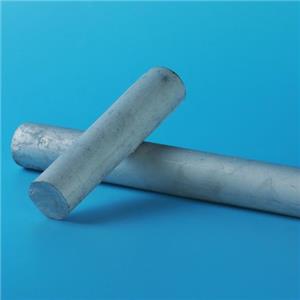
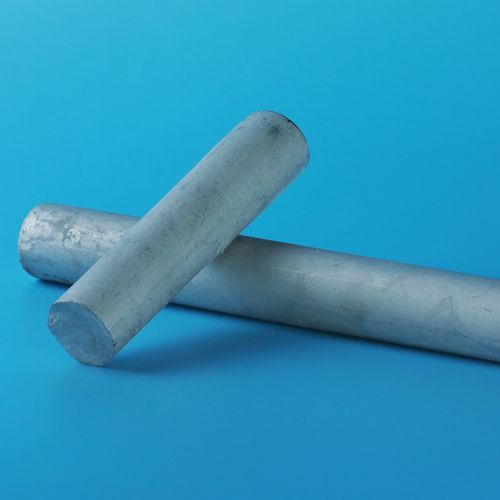
Molybdenum round bars: Standard and custom diameters; available in fixed or random lengths → http://www.htmoly.com/product/molybdenum-metal-round-bar
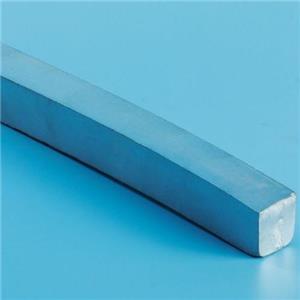
Molybdenum square bars: High-precision cross-sections; suitable for structural components and precision machining → http://www.htmoly.com/product/molybdenum-metal-square-bar
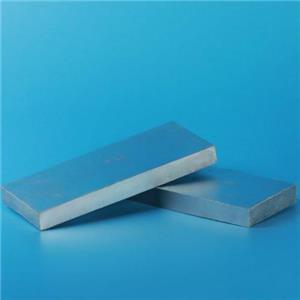
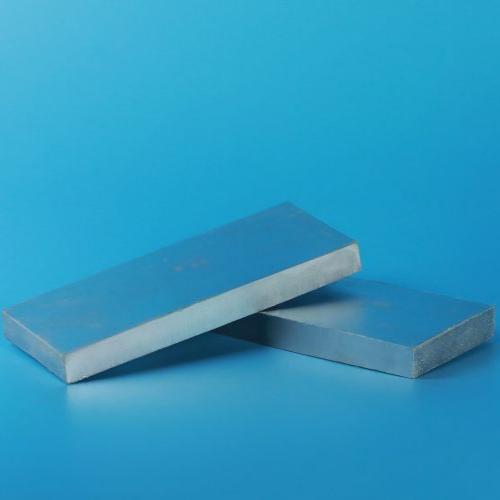
Molybdenum rectangular bars: Flat-profile material; suitable for fixture plates, electrodes, and thermal management components → http://www.htmoly.com/product/molybdenum-metal-bar
Molybdenum rods: Small-diameter rod stock; suitable for precision machining and welding applications → http://www.htmoly.com/product/molybdenum-metal-rod
Standard supply purity is ≥ 99.95% Mo, with high-purity grades of 99.97% and 99.99% available upon request. Each batch comes with a material certificate detailing elemental composition, mechanical test results, and dimensional inspection data. Located in Liaoning Province—a major global hub for molybdenum production—the company ensures a stable, traceable supply of raw materials and maintains full in-house control over the entire process, from powder metallurgy to final product fabrication.
Summary
The purity of molybdenum metal bars is by no means a secondary specification; it is a critical variable determining overall performance under actual operating conditions—influencing everything from toughness, creep resistance, electrical conductivity, and surface finish quality to the risk of process contamination.
Selecting a supplier that rigorously controls purity, provides verifiable quality certifications, and possesses a deep understanding of downstream application requirements is just as important as choosing the right purity grade itself.
We invite you to contact Liaoning Hongtuo New Material Technology Co., Ltd. for technical consultation, product specifications, and competitive pricing on molybdenum metal bars.